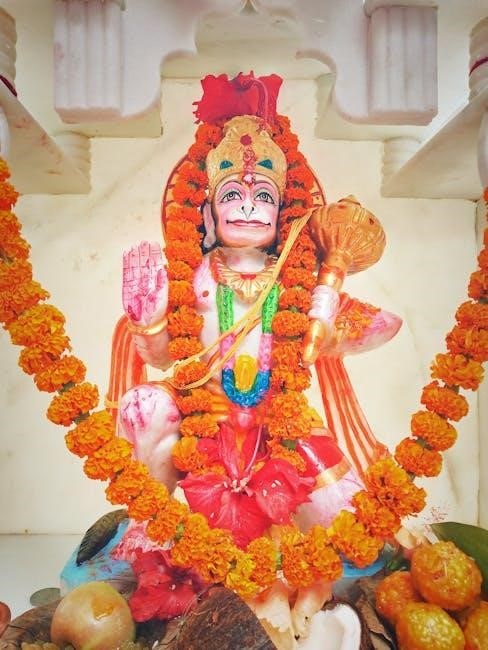
Hanuman Chalisa PDF: A Comprehensive Guide (Updated 04/16/2026)
Discover authentic Sanskrit Hanuman Chalisa PDFs, meticulously preserved in Devanagari script for genuine recitation. Explore free downloads and enhance your spiritual practice today!
The Hanuman Chalisa, a revered Hindu devotional hymn dedicated to Lord Hanuman, holds immense spiritual significance for devotees worldwide. Increasingly, individuals seek access to the Hanuman Chalisa in Sanskrit PDF format to connect with the original verses and experience the profound power of this sacred text.
This ancient hymn, composed by Tulsidas, is traditionally recited to invoke Hanuman’s blessings for strength, courage, devotion, and protection. The Sanskrit version, preserved in Devanagari script, offers a direct link to the hymn’s original form, allowing for authentic pronunciation and deeper understanding.
Numerous online resources now provide free Hanuman Chalisa PDF downloads, including versions in Sanskrit, catering to a global audience. These PDFs facilitate convenient access for personal study, recitation, and printing, fostering a wider appreciation for this timeless spiritual practice.
What is the Hanuman Chalisa?
The Hanuman Chalisa is a 40-verse (chaupai) devotional hymn written in the Awadhi dialect, glorifying Lord Hanuman. However, the original essence and power are often sought through the Hanuman Chalisa in Sanskrit, available as a PDF for dedicated study.
It’s a powerful spiritual tool for overcoming obstacles, fostering devotion, and attaining inner peace. The Sanskrit version, meticulously transcribed in Devanagari script, preserves the hymn’s sacred vibrations and allows for precise recitation.
Many devotees prefer the Sanskrit PDF to deepen their connection with Hanuman, appreciating the authenticity and linguistic richness. Accessing these resources online provides a convenient way to engage with this timeless hymn and experience its transformative benefits.
The Significance of Reciting the Hanuman Chalisa
Reciting the Hanuman Chalisa, particularly from a Sanskrit PDF, holds immense spiritual significance. It’s believed to dispel negative energies and foster a protective shield around the devotee. The Sanskrit version, with its precise phonetic structure, amplifies these benefits.
Devotees often turn to the Hanuman Chalisa for strength, courage, and unwavering devotion to Lord Rama. Utilizing a PDF allows for consistent and accessible practice. The power of bhakti (devotion) is heightened through sincere recitation of the Sanskrit verses.
Regular chanting, guided by a reliable PDF resource, is said to promote spiritual growth, overcome challenges, and ultimately lead to enlightenment.

Hanuman Chalisa in Sanskrit: Exploring the Original Text
Delve into the sacred Sanskrit verses of the Hanuman Chalisa, readily available as a PDF. Experience the hymn’s divine power and authentic form!
The Importance of the Sanskrit Version
The Sanskrit version of the Hanuman Chalisa holds immense significance for devotees seeking a deeper connection with the divine. It represents the original composition, preserving the precise meaning and vibrational energy intended by Tulsidas. Accessing a Hanuman Chalisa PDF in Sanskrit allows for authentic recitation and understanding of the verses.
Unlike translations, the Sanskrit text maintains the purity of the language and the subtle nuances of each word. This is crucial for experiencing the full spiritual benefits of the Chalisa. Many believe reciting in Sanskrit amplifies the potency of the mantras.
PDF formats ensure accessibility and allow devotees to study the Devanagari script, aiding in correct pronunciation and deeper comprehension. The Sanskrit version is considered the most powerful and revered form of this sacred hymn, offering profound spiritual growth.
Devanagari Script and Pronunciation
The Hanuman Chalisa in Sanskrit is traditionally written in the Devanagari script, a beautiful and ancient writing system. Hanuman Chalisa PDF resources often showcase this script, enabling devotees to learn and practice correct pronunciation. Mastering Devanagari unlocks a deeper understanding of the verses’ phonetic structure and inherent energy.
Accurate pronunciation is vital, as each syllable carries spiritual weight. Online resources and audio guides can assist with learning the correct sounds. Paying attention to the matras (vowel signs) and consonant combinations is key.
PDF versions with transliteration can be helpful for beginners, but ultimately, studying the Devanagari script itself is highly recommended for a truly immersive and authentic experience.
Differences Between Sanskrit, Hindi, and English Versions
While the Hanuman Chalisa’s essence remains consistent, variations exist across languages. The original Sanskrit version, often found in Hanuman Chalisa PDF formats, holds the purest form, preserving nuanced meanings and phonetic precision. Hindi versions, widely accessible, offer a more colloquial interpretation, simplifying complex Sanskrit vocabulary.
English translations, though valuable for understanding, inevitably lose some of the original’s poetic depth and spiritual resonance. Direct translations can struggle to capture the subtle connotations embedded within Sanskrit grammar and imagery.
PDF resources often provide all three versions, allowing for comparative study. Recognizing these differences enhances appreciation for Tulsidas’s masterful composition and the power of the original Sanskrit verses.

Accessing Hanuman Chalisa PDF Resources
Find authentic Sanskrit Hanuman Chalisa PDFs online, available for free download in various formats. Explore resources for personal study and devotion!
Free PDF Downloads: Available Languages
Immerse yourself in the divine verses of the Hanuman Chalisa! We proudly offer free PDF downloads in a multitude of languages to cater to a global audience. Beyond English and Hindi, devotees can access the Chalisa in Marathi, Telugu, Gujarati, Tamil, Bengali, Odia, Kannada, and Malayalam.
However, for those seeking the original spiritual potency, the Sanskrit Hanuman Chalisa PDF remains paramount. This version, preserved in the sacred Devanagari script, allows for authentic pronunciation and a deeper connection to the hymn’s essence. Downloading the Sanskrit PDF enables a more profound understanding of Tulsidas’s masterpiece, unlocking the full benefits of this powerful devotional practice.
These readily available resources facilitate widespread access to this cherished text, fostering devotion and spiritual growth worldwide.
Where to Find Reliable Hanuman Chalisa PDFs Online
Locating authentic Sanskrit Hanuman Chalisa PDFs requires discernment. While numerous websites offer downloads, prioritizing reliability is crucial for accurate recitation and spiritual benefit. Reputable sources often include dedicated spiritual websites and digital libraries focused on Hindu scriptures.
Rajneel is highlighted as a source for high-quality Sanskrit PDFs, perfect for chanting and spiritual growth. Be cautious of sites with unclear origins or those offering heavily modified versions. Always verify the Devanagari script’s accuracy and completeness.
Remember that some PDFs are intended for personal study and research only, with restrictions on copying or reposting. Respecting copyright and attribution ensures ethical access to this sacred text.
Hanuman Chalisa PDF for Printing
For tangible practice, downloading a Sanskrit Hanuman Chalisa PDF optimized for printing is ideal. Ensure the file’s formatting preserves the Devanagari script’s clarity and readability when reproduced. A well-formatted PDF will maintain proper line breaks and font sizes for comfortable chanting.
Consider paper quality; thicker paper stock enhances the reading experience and durability. Before printing, preview the document to confirm alignment and prevent any text truncation.
High-resolution PDFs from trusted sources like Rajneel offer superior print quality. This allows for a beautiful and reverent physical copy of the Hanuman Chalisa for personal devotion and study.
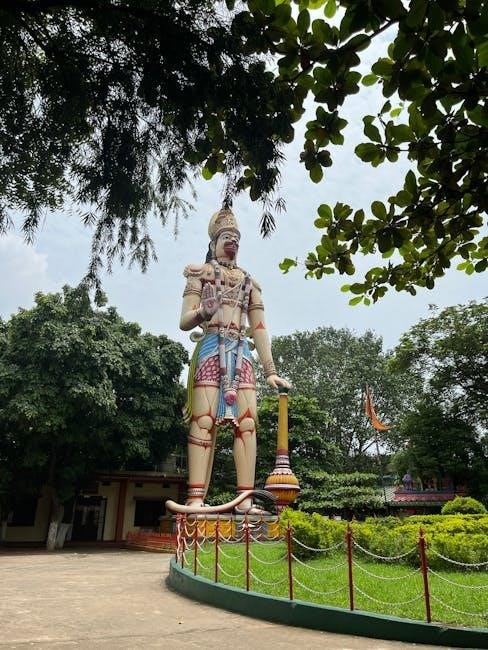
Understanding the Structure of the Hanuman Chalisa
The Sanskrit Hanuman Chalisa comprises 40 verses (chaupais), framed by introductory and concluding dohas, all meticulously preserved within available PDF versions.
The 40 Verses (Chaupais)
The core of the Hanuman Chalisa, in its Sanskrit form as found in many PDFs, consists of forty verses known as chaupais. These verses beautifully narrate the divine attributes and heroic deeds of Lord Hanuman.
Each chaupai is a quatrain, carefully constructed to convey profound spiritual meaning. PDF versions faithfully reproduce these verses in Devanagari script, allowing for accurate pronunciation and understanding of the original Sanskrit;
They detail Hanuman’s unwavering devotion to Rama, his immense strength, courage, and wisdom. The chaupais also explore themes of selflessness, humility, and the path to liberation. Studying these verses within a PDF format provides a convenient and accessible way to connect with this sacred text and deepen one’s devotion.
The Doha (Couplet) at the Beginning
The Hanuman Chalisa, even in its Sanskrit PDF iterations, commences with a significant doha – a couplet setting the auspicious tone for the entire hymn. This initial doha invokes Lord Shiva, acknowledging him as Hanuman’s preceptor and source of strength.
PDF versions meticulously preserve this opening couplet in Devanagari script, ensuring devotees can recite it with reverence and accuracy. It’s a crucial element, establishing the divine lineage and purpose of the Chalisa.
The Sanskrit doha beautifully encapsulates the essence of Hanuman’s devotion and the transformative power of spiritual guidance. It prepares the mind for the subsequent verses, fostering a receptive and devotional atmosphere.
The Doha (Couplet) at the End
Concluding the Sanskrit Hanuman Chalisa PDF is another vital doha, a couplet that serves as a powerful benediction and affirmation of faith. This final verse encapsulates the transformative impact of reciting the Chalisa and seeking Hanuman’s grace.
PDF versions faithfully reproduce this concluding doha in Devanagari, allowing devotees to experience its full spiritual potency. It expresses a heartfelt desire for unwavering devotion and the fulfillment of righteous endeavors.
The Sanskrit text emphasizes the enduring benefits of Hanuman’s blessings, promising peace, prosperity, and liberation from worldly suffering. It’s a fitting culmination, leaving the devotee with a sense of hope and divine connection.

Key Themes and Concepts in the Hanuman Chalisa
Sanskrit Hanuman Chalisa PDFs reveal core themes: unwavering devotion to Rama, Hanuman’s immense strength, and the transformative power of bhakti, fostering spiritual growth.
Devotion to Lord Rama
The Sanskrit Hanuman Chalisa, readily available as a PDF, profoundly emphasizes unwavering devotion – bhakti – to Lord Rama. Throughout the 40 verses, Hanuman’s selfless service and complete surrender to Rama are central. The text, in its original Devanagari script, showcases Hanuman as the epitome of a devotee, constantly chanting Rama’s name and dedicated to His welfare.
PDF versions allow devotees to study the nuances of this devotion in the original language. The Chalisa details Hanuman’s role in assisting Rama, highlighting his loyalty and courage. This theme resonates deeply, inspiring readers to cultivate similar devotion in their own lives. Accessing the Sanskrit PDF provides a direct connection to the spiritual essence of Hanuman’s love for Rama, fostering a deeper understanding of this core concept.
Hanuman’s Strength and Courage
The Sanskrit Hanuman Chalisa PDF vividly portrays Hanuman’s extraordinary strength – both physical and mental – and unwavering courage. The verses, preserved in Devanagari script, detail his incredible feats, like leaping across the ocean to Lanka. This isn’t merely brute force; it’s a strength born from devotion and righteousness.
PDF access allows a focused study of how Hanuman overcomes obstacles with fearless determination. The text emphasizes his ability to face any challenge while remaining steadfast in his service to Lord Rama. His courage isn’t reckless, but guided by wisdom and unwavering faith. The Sanskrit version, in particular, captures the power and majesty of Hanuman’s character, inspiring devotees to cultivate similar qualities within themselves.
The Power of Bhakti (Devotion)
The Sanskrit Hanuman Chalisa PDF profoundly illustrates the transformative power of bhakti – selfless devotion. The verses, meticulously preserved in Devanagari script, showcase Hanuman’s unparalleled love and dedication to Lord Rama as the core of his strength. Accessing the PDF allows deep contemplation of this central theme.
Hanuman’s actions aren’t driven by personal gain, but by pure, unwavering devotion. The Sanskrit text emphasizes that this bhakti is the source of his courage, wisdom, and extraordinary abilities. It’s a powerful message: true strength lies in surrendering to a higher power. Studying the Chalisa in its original Sanskrit form amplifies this understanding, fostering a deeper connection to the divine.
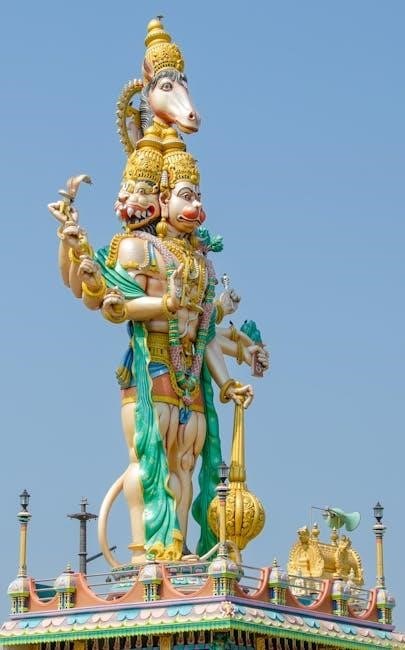
Benefits of Reciting the Hanuman Chalisa
Sanskrit Hanuman Chalisa PDFs unlock spiritual growth, remove negativity, and overcome obstacles through devoted recitation of this powerful, ancient hymn.
Removing Negative Energies
The Sanskrit Hanuman Chalisa, accessed through dedicated PDF resources, is profoundly effective in dispelling negative energies. Its potent verses, when recited with sincerity, create a protective shield against harmful influences. Devotees believe the divine vibrations emanating from the Sanskrit text neutralize malevolent forces and purify the surrounding environment.
Utilizing a Sanskrit Hanuman Chalisa PDF ensures accurate pronunciation and adherence to the original form, maximizing its protective capabilities. The power lies in the precise articulation of the mantras, resonating with cosmic energies to ward off negativity. Consistent recitation, guided by a reliable PDF, fosters a sense of security and spiritual well-being, effectively clearing obstacles and promoting a harmonious atmosphere.
Spiritual Growth and Enlightenment
Engaging with the Sanskrit Hanuman Chalisa PDF is a powerful catalyst for spiritual evolution and enlightenment. The verses, steeped in devotion and wisdom, facilitate a deeper connection with the divine. Studying the original Sanskrit text, even with translation aids, unlocks layers of meaning inaccessible in other versions.
Consistent recitation, guided by a quality PDF, cultivates inner peace, self-awareness, and a heightened sense of purpose. The Chalisa’s emphasis on selfless service and unwavering faith inspires devotees to transcend ego and embrace a life of virtue. Accessing the Sanskrit version fosters a profound understanding of Hanuman’s exemplary character, accelerating one’s journey towards spiritual liberation.
Overcoming Obstacles and Challenges
The Sanskrit Hanuman Chalisa PDF serves as a potent shield against life’s inevitable obstacles and challenges. Rooted in Hanuman’s unwavering devotion and extraordinary strength, the verses instill courage and resilience in the face of adversity. Reciting the Chalisa, particularly from a Sanskrit source, invokes Hanuman’s blessings for protection and guidance.
By focusing on the divine energy embodied in the Sanskrit text, devotees can dissolve fear, anxiety, and self-doubt. The Chalisa’s powerful mantras clear negative energies and create a positive atmosphere conducive to problem-solving. Utilizing a reliable PDF ensures accurate pronunciation and maximizes the transformative impact of this sacred hymn, paving the way for success.
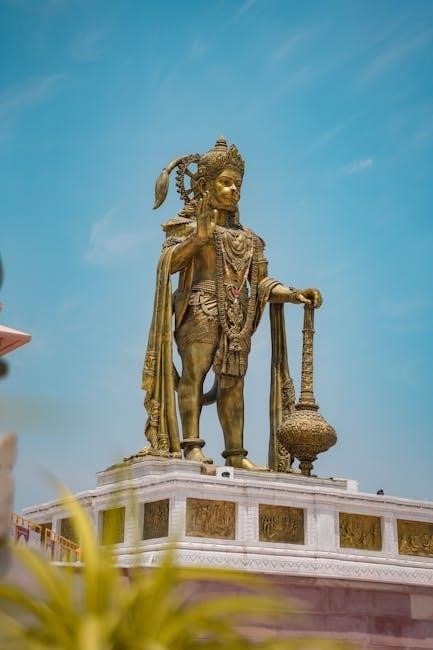
Hanuman Chalisa Recitation Practices
Utilize Sanskrit Hanuman Chalisa PDFs for authentic pronunciation during recitation. Regular practice, ideally at optimal times, amplifies the spiritual benefits and fosters devotion.
Optimal Times for Recitation
For maximum efficacy, reciting the Hanuman Chalisa, particularly from a Sanskrit PDF, is highly beneficial during specific times. Traditionally, early mornings before sunrise are considered auspicious, aligning with Hanuman’s waking hours. Evening recitations, especially at dusk, are also potent, mirroring the time Hanuman aided Rama.
Tuesday, dedicated to Lord Hanuman, is exceptionally favorable. Reciting the Chalisa during Brahmamuhurta (approximately 96 minutes before sunrise) amplifies its spiritual impact. Utilizing a Sanskrit PDF ensures accurate pronunciation, deepening the connection with the divine energy. Consistency is key; regular recitation, even a few verses daily, yields significant benefits.
Consider reciting on Hanuman Jayanti, the birth anniversary of Lord Hanuman, for heightened blessings. The Sanskrit version, accessed through a PDF, preserves the original sanctity and power of the verses, enhancing the devotional experience.
Frequency of Recitation
The frequency of reciting the Hanuman Chalisa, especially when utilizing a Sanskrit PDF for accurate pronunciation, is a personal choice guided by devotion and circumstance. Daily recitation is considered ideal, fostering a continuous connection with Hanuman’s protective energy. However, even reciting it a few times a week offers substantial benefits.
For specific challenges, increasing the frequency to 21 or 108 times can be profoundly impactful. Utilizing a Sanskrit PDF during these intensified recitations ensures adherence to the original verses’ power. Consistency outweighs quantity; a sincere, regular practice is more valuable than sporadic, lengthy sessions.
Consider reciting the entire Chalisa, or select verses from the Sanskrit PDF, during times of stress or adversity. The rhythmic chanting, guided by the authentic text, provides solace and strength.
Proper Etiquette During Recitation
When reciting the Hanuman Chalisa, particularly using a Sanskrit PDF to maintain authenticity, observe respectful etiquette. Begin by purifying yourself with a bath and wearing clean clothes. Find a quiet, serene space free from distractions. Face East or North while reciting, and keep a picture or idol of Lord Hanuman nearby.
Maintain a focused mind and pronounce the Sanskrit verses from the PDF clearly and respectfully. Avoid interrupting the recitation unnecessarily. Offer a small offering – flowers, incense, or fruit – as a gesture of devotion.
Cultivate a humble and reverent attitude throughout the practice. The power of the Chalisa lies not just in the words, but in the sincerity of your devotion.
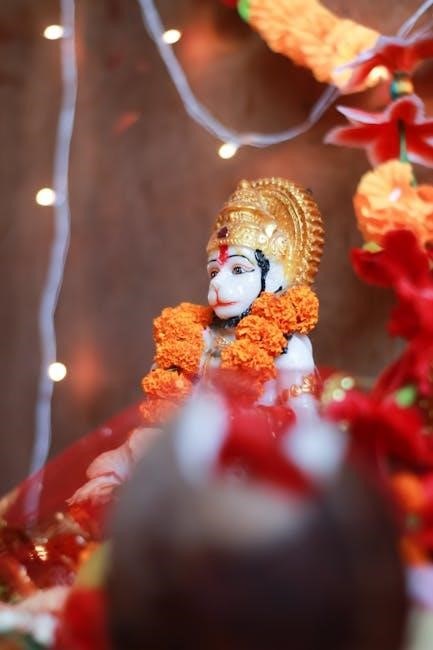
Hanuman Chalisa and Related Texts
Explore connections between the Hanuman Chalisa, Sanskrit stotras like Sri Devi Khadgamala, and other Hanuman hymns, deepening your understanding of devotional literature.
Sri Devi Khadgamala Stotram Connection
The Sri Devi Khadgamala Stotram, a powerful hymn to the Divine Mother, shares a subtle yet significant connection with the Hanuman Chalisa, particularly when exploring Sanskrit versions. Both texts are deeply rooted in Hindu devotional traditions and utilize potent mantras.
Devotees often find that reciting both the Hanuman Chalisa in Sanskrit and the Sri Devi Khadgamala Stotram creates a synergistic spiritual effect. The Hanuman Chalisa focuses on devotion, strength, and selfless service, while the Khadgamala invokes the protective and empowering energy of the Divine Mother.
Accessing PDFs of both texts allows for comparative study of the Sanskrit verses, revealing shared linguistic and thematic elements. This combined practice can enhance one’s spiritual journey, fostering both inner strength and divine grace.
Relationship to Other Hanuman Stotras
The Hanuman Chalisa, even in its Sanskrit PDF form, exists within a rich tradition of Hanuman stotras (hymns). While the Chalisa is unique in its 40-verse structure, it shares thematic and devotional similarities with longer, more elaborate stotras dedicated to Lord Hanuman.
Many Sanskrit Hanuman stotras, like the Hanuman Ashtaka and Hanuman Bahuk, praise Hanuman’s strength, devotion to Rama, and role as a protector. Studying these alongside the Chalisa’s Sanskrit text reveals a consistent portrayal of Hanuman’s virtues.
PDF resources often include collections of various Hanuman stotras, allowing devotees to explore the breadth of devotional literature. Understanding these relationships enriches appreciation for the Hanuman Chalisa’s place within the broader Hanuman tradition.
Tulsidas and the Composition of the Hanuman Chalisa
The Hanuman Chalisa is widely attributed to the 16th-century poet Tulsidas, a devout follower of Lord Rama. While the original composition was in Awadhi, a dialect of Hindi, the Sanskrit versions available as PDFs represent translations and adaptations aiming to preserve the hymn’s essence in a classical language.
Tulsidas’s deep devotion to Hanuman is evident throughout the Chalisa, highlighting Hanuman’s unwavering loyalty and extraordinary powers. The Sanskrit PDFs often maintain the core devotional spirit of Tulsidas’s work, offering a more formal and scholarly approach to the verses.
Understanding Tulsidas’s authorship provides context when studying the Sanskrit translations, recognizing the original intent behind each verse.
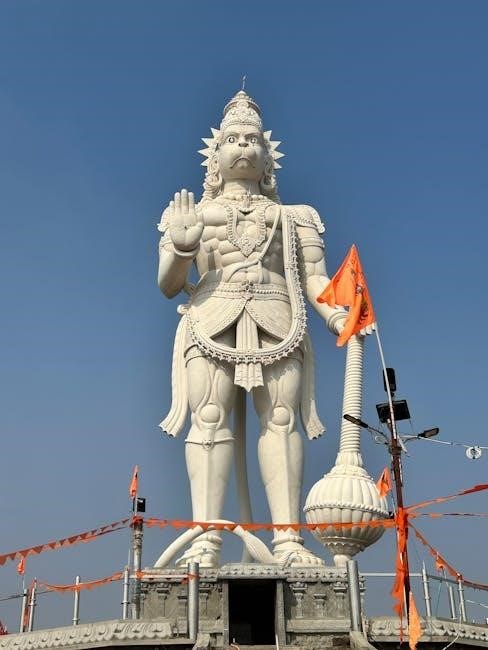
Hanuman Chalisa: Sanskrit Text Snippets
Explore key Sanskrit verses from the Hanuman Chalisa PDF, including “Namah Hanumate Namah Hanumate” and “Buddhiheen tanu jaanake,” for authentic recitation.
नमः हनुमते नमः हनुमते (Namah Hanumate Namah Hanumate)
This foundational Sanskrit mantra, “Namah Hanumate Namah Hanumate,” initiates the Hanuman Chalisa, appearing prominently in numerous PDF versions available online. It represents a reverent salutation and complete surrender to Lord Hanuman.
Within the Devanagari script of the Sanskrit Hanuman Chalisa PDF, this phrase is repeated, emphasizing its significance. Devotees often begin their recitation with this powerful invocation, seeking Hanuman’s blessings and protection.
The repetition isn’t merely stylistic; it’s a core element of bhakti, deepening the devotee’s connection. Finding a reliable PDF ensures accurate transcription of this vital mantra, preserving its sacred power for spiritual practice and growth.
बुद्धिहीन तनु जानके (Buddhiheen tanu jaanake)
“Buddhiheen tanu jaanake,” a crucial verse within the Sanskrit Hanuman Chalisa, translates to recognizing one’s own lack of wisdom and physical limitations. This self-awareness is central to the hymn’s message, readily accessible in downloadable PDF formats.
The Sanskrit text, preserved in Devanagari script within these PDFs, emphasizes humility as a prerequisite for divine grace. Hanuman’s own recognition of his imperfections fuels his unwavering devotion to Rama.
Studying this verse in its original Sanskrit form, via a quality PDF, allows for a deeper understanding of its nuance. It encourages devotees to surrender ego and seek Hanuman’s guidance, fostering spiritual progress.
चपई जय हनुमान ज्ञान गुण सागर (Chapai Jai Hanuman Gyan Gun Sagar)
“Chapai Jai Hanuman Gyan Gun Sagar” – a cornerstone verse of the Hanuman Chalisa, glorifies Hanuman as an ocean of knowledge and virtue. Accessing this powerful verse in its original Sanskrit form is readily available through numerous PDF resources online.
These PDFs, often featuring the Devanagari script, allow devotees to connect directly with the hymn’s sacred energy. The phrase emphasizes Hanuman’s unparalleled wisdom and righteous qualities, inspiring devotees to cultivate similar attributes.
Studying the Sanskrit text within a Hanuman Chalisa PDF deepens understanding, revealing layers of meaning beyond simple translation. It’s a potent mantra for spiritual growth and devotion.
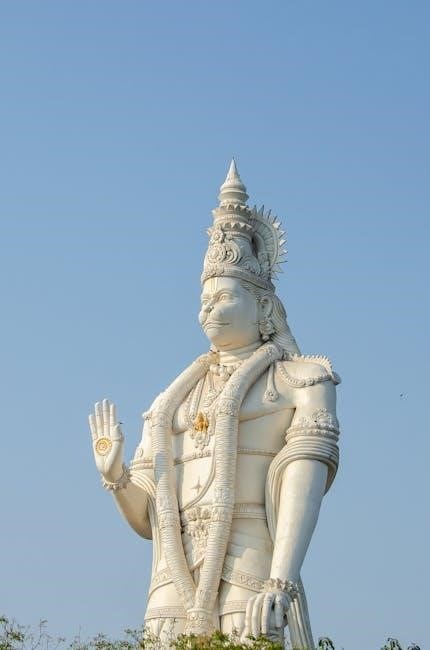
Legal and Ethical Considerations for PDF Usage
Respect copyright when downloading Sanskrit Hanuman Chalisa PDFs; attribute sources and avoid unauthorized reposting. Use these sacred texts responsibly for personal study.
Copyright and Permissions
Understanding copyright is crucial when accessing Sanskrit Hanuman Chalisa PDFs. While many resources offer free downloads for personal use, the original compositions and translations are often protected by copyright laws.
Volunteers often prepare these digital texts, and permissions may be required for wider distribution or commercial use. Always check the source’s licensing terms before copying, sharing, or reposting the PDF.
Respecting intellectual property ensures the continued availability of these sacred texts and supports the efforts of those who dedicate their time to preserving and sharing them. Attribution to the original creators is highly encouraged, fostering a culture of respect and ethical digital practices.
Responsible Sharing of PDF Files
Sharing Sanskrit Hanuman Chalisa PDFs requires mindful consideration. While spreading devotion is commendable, ensure you’re distributing legitimate, unaltered versions. Avoid modifying the text or removing attribution details.
Prioritize reliable sources to prevent the circulation of inaccurate or corrupted files. When sharing digitally, respect the original source’s terms of use and avoid mass distribution without permission.
Consider the spiritual significance of the text and share it with individuals who will appreciate its sanctity. Promote responsible digital citizenship by encouraging others to respect copyright and attribution guidelines, preserving the integrity of this sacred hymn.
Attribution and Source Crediting
Properly crediting the source of Sanskrit Hanuman Chalisa PDFs is crucial. Many versions are prepared by dedicated volunteers, as noted by Rajneel, and are intended for personal study and research.
Always acknowledge the original creators and avoid presenting the PDF as your own work. If sharing, clearly state the source website or individual responsible for its creation.
Respecting intellectual property and the efforts of those who’ve transcribed and formatted the text demonstrates gratitude and upholds ethical standards. This ensures the continued availability of accurate and reverent resources for all devotees.